Tolerance Tensions
Balancing tolerance, curiosity and boundaries in a collapsing world

I am longing for conversations with people with whom I ‘disagree’, who live in ‘other’ bubbles of our society, who hold perspectives I have not yet met, who gather and live in ‘other’ spaces.

The use of ‘other’ here is deliberate. Being painfully aware of how the concept of the ‘other’ is normalised, creating an ever-present tension with the nonduality of life. Fueled by the algorithmic economy, we are polarised and separated in constantly further shrinking, narrow boundary bubbles. Our bubbles, the concept of ‘the other’, the notion of separation are all human constructs. And they are tearing our beings apart.
Intellectual Wanking
I have to admit, from time to time, I love the cushy comfort of my ‘safe’ bubbles. Where I converse and convey with people whom I don’t have to explain anything to, who understand my pain, who speak the same ‘language’ of regeneration, collapse and decolonisation. Only, at some point, it starts feeling like ‘intellectual’ wanking. It feels good, but it does not really create any movement. And as I do not claim to know the directions or solutions of our times, it’s exactly creating, nurturing and stirring movement I committed myself to.
These safe wanking spaces (pardon my English) definitely serve a purpose. They feel necessary for nurturing our strength and willingness to carry on with the work of unravelling, composting, healing and reconnecting, but it’s not where the real hard work of hospicing modernity is done.
This article is nurtured and shaped by two years of lengthy meandering conversations with Joy Njeri. Together we dance with a whirlwind of Seismic Questions on tolerance, belonging and inclusion. In the last Seismic Questions gathering, Joy centred the question “How does our relationship with privilege affect our relationship with inclusion /and/ belonging?” This question, in countless forms, has been very alive in us over the last couple of years. It’s intolerance (or rather an inability for tolerance), the illusion of separation and the tendency to othering, we keep bumping into in our efforts to nurture movement, shift horizons, expand perceptions and enable people (and ourselves) to notice contexts and multitudes of being.
Joy and I keep asking ourselves how to bring Seismic Questions beyond the ‘choir’? How can we hold questions such as ‘Who wrote history?’, ‘What if we learn how to speak whale?’, and ‘What are borders?’ in spaces with farmers, politicians, supermarket staff, chefs, racist uncles, snackbar owners, football fans, hairdressers, gardeners, people experiencing homelessness, accountants, distant neighbours and lovely but slightly xenophobic grandmothers?
What are the spaces and places that make you go “oh no, they are all [insert stereotype]”?. What if next time you want to create ‘impact’, you go to one of those spaces? Not to educate or convince, simply to be in a mutual transcontextual learning relationship. You may be surprised by what unfolds!
Curiosity makes the world go round
There is so much curiosity to go around. What if we treated ignorance not as a bad trait but as the bad luck of not truly being invited (yet) into other perspectives, stories, challenges and lives? What if we acknowledged that we can all invite each other?
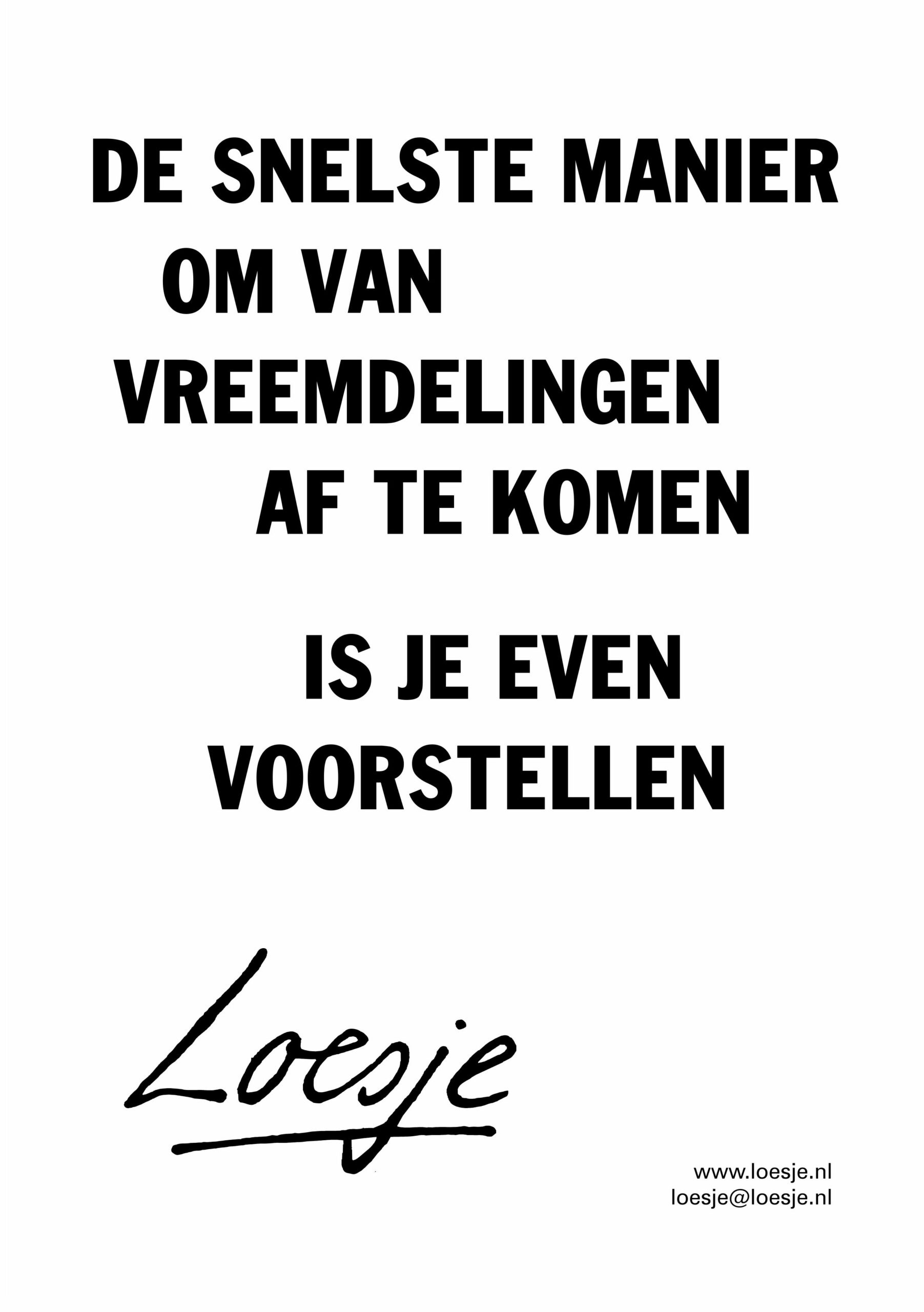
A simple antidote to polarisation is to get to know each other beyond our keyboards. A simple solution to “getting rid” of strangers is simply introducing yourself. Polarisation and intolerance thrive on the illusion of separation. Once we get to know each other in our humaness, our stories, favourite dishes, the smells of our grandmothers’ houses, the feeling of home, the music that makes our hearts bounce. Once we get to truly meet. Hatred becomes very hard.
Who can I be when I am with you?
Who can you be when you are with me?Nora Bateson
It does not come as a surprise that once again, shared meals are the antidote. It’s almost impossible to uphold a hostile relationship with someone with whom you are enjoying a mezze or sharing a pizza. Direct contact, meals, and conversations quickly break caricatures and stereotypes. It’s somewhat absurd that, apparently, we (in modernity) had to get this confirmed by academic research.
Tragic Misperception
Polarisation and intolerance are frequently fueled by misperception. When humans are othering, which unfortunately has become one of modernity’s favourite hobbies, they consistently overestimate the amount of out-group hatred and negativity. In the algorithmic economy, the loudest, sharpest and most extreme are often able to grab attention. Influencers and media frequently spew racist, sexist, homophobic language for clickbait effect. These practices influence our perception and lure us into perceiving ideological extremity as the norm, whilst in reality, extremity is rare. When we identify with a group (democrats, vegans, Green Party, metalheads, football fans), we tend to see the ‘other side’ as a stereotypical monolithic group. Simultaneously, in our ‘own’ group, we recognise her variety and complexity. I assume because with proximity we are introduced to complexity. A simple way to splinter the monolith is simply to get to know each other.
Monoliths & Mosaics
Curious introductions splinter the monolith
From hardened stereotypes to fascinating mosaics
Strangers becoming
Alivening /our/ stories
Slaying the beast of othering
It’s valuable to recognise that living in modernity constantly puts our nervous system on high alert. Most humans who are infected with the disease of modernity are not truly living in a right relationship; we are not living in alignment with the ‘expectations’ of our nervous system. Not having a regulated nervous system during times of collapse is natural; it’s a healthy response to crisis. That said, it does not make it easier to respond with complexity, tolerance and nuance. Awareness of this tension has helped me to both hold kindness for myself and others when we respond from a place of intolerance and binary logic. Perhaps simply becoming more aware of this tension can help to widen our window of tolerance?
Dancing with Uncertainty

Solutionising a regenerative future through the lens of modernity is a futile effort. We can’t project-manage a life-aligned future into being. Times of collapse always come paired with uncertainty. It’s this uncertainty we will need to accept and tolerate so as not to fall into the trap of once again forcing an artificial reality into existence. The challenge is that in liminal, tricky, uncertain times it’s exactly certainty people are longing for. Especially when they are untethered from rituals, ceremonies and protocols that nurture their sense of belonging.
We found that polarised perception, ideologically warped perceptions of the same reality, was strongest in people with the lowest tolerance for uncertainty in general.
Those who are less tolerant to uncertainty in daily life have more ideologically polarised brain responses than those who are better able to tolerate uncertainty. This suggests that aversion to uncertainty governs how the brain processes political information to form black-and-white interpretations of inflammatory political content,”
The Trauma Paradox
The window of tolerance and our current highly polarised world are entangled in a messy dynamic. The chronic stressors of living in a highly polarised climate shrink our windows of tolerance and, with this shrinking, weaken our ability to show up with tolerance, calmness and curiosity. Resulting in a society where we are constantly responding to each other from tiny windows and naturally non-emotionally regulated states of being.
In polarised environments, people may construct a “faux window of tolerance”, a defensive bubble of safety where they only interact with ‘like-minded’ individuals, leading to a false sense of security and increased intolerance for difference. With Seismic Questions, we are seeking ways for people to meet each other in, through, outside and among their windows, always with the intention to commit to the hard work of getting back into right relationship.
Questioning Cancel Culture
What if we learned how to draw boundaries without turning them into impermeable walls?
The uncle, neighbour, boss, colleague, friend, you so deeply, fully, all-encompassingly disagree with is not separate from you. Life is not binary. Arguments are not to be “won”. People are not to be changed. We simply co-exist in constant mutual learning relationships, and it’s not our responsibility nor place to dictate how a person has to change, what is right, what is wrong, who is right, who is wrong. The cancelling culture, impermeable walls, hard boundaries, fixed borders, they all imply a binary order that simply is not.
This section is confrontational to write. It’s a minefield to advocate tolerance in a society so deeply steeped in pain. Tolerance does not mean accepting everything that is thrown at you or turning the other cheek. When we in Seismic Questions refer to tolerance, we mean the ability to becoming/being in right relationship. And when we advocate for more tolerance, we are asking ourselves and others to do the work to be able to become in right relationship.
Cancel culture sprouted from within the context of modernity, seems to be a reaction to the absence of;
spaces, time and room for nuance
the impossibility of self-regulating the nervous system and being emotionally regulated in a society under immense pressure
close relationships with room for multitudes of being
rituals, ceremony, protocols for holding tension and conflict (e.g. council, forum)
Believe in nonduality; instead, cancel culture is grounded in a we-them, offender-victim narrative. Denying we are all suffering from the same disease.
Social media and its fragmentation into echo chambers made us relationally lazy, only willing to connect and vibe with those we already agree with, eventually leading to a collective inability to co-exist with multitudes of being. I am afraid the ‘normalisation’ of cancel culture is fueling an inability to co-exist and perceive other perceptions. Instead of facing the uncomfortable conversations and questioning each other’s beliefs and stories, we hide away in the sheltered (and fragile) comfort and safety of our bubbles.
We are questioning here the tendency to quick, unnuanced cancelling, not the whole notion of cancelling. When, for example, there is consequently no room for evolvement, mutual learning, and/or someone is consciously perpetuating harm, shunning someone from society/community is an ancient and traditional way to contain harm and violence. As with almost anything, cancel culture isn’t a binary nor straightforward dynamic that can be removed from its context and generically judged as either “good” or “bad”.
We seek to strike a balance of emphasising the importance of co-existing in disagreement, conversing, conveying and communing in a fragmented world. The more divided and polarised we are, the less likely we are to respond resiliently to the crises, upheavals and uncertainty.
Simultaneously, millions of people across the world have countless reasons to be angry, to draw a line and opt for cancelling as a means to try and break destructive and harmful systems. Our question is, where do we draw the line?
What are the conversations that we need to have?
What are the questions that we need to hold together?
When is enough enough?
We can not expect people who have to endure perpetuating, intentional harm to endlessly convey, co-exist and converse with those inflicting harm on them. Even when everyone involved is infected and shaped by the disease of modernity, it would be too much to ask people who are harmed to heal both themselves and help heal the harmer. To add complexity, in many ways we are all harmed and harmer, depending on the context and dynamic. None of this is comfortably generically coherent, but therefore it is no less true.
Questions I/We/Us are holding
Take them how they feel useful to you, for example as journal inquiries, artistic prompts or conversation starters
How can I claim curiosity without having curiosity for the source of hatred?
How do we mark our boundaries without turning them into impermeable walls?
Where and how can we meet people who are locked in complete overwhelm and binary logic? Where/how are we locked into binary logic?
How can I claim tolerance when I have no tolerance for intolerance?
How may we show up to the unravelling of separative and extractive dynamics with grace?
What roles do humour and tricksters play in hospicing modernity? How may we create spaces for them?
What may be the unintentional consequences of ‘normalising’ cancel culture?
And some more: What if strengthening our ability to question and converse without cancelling can help us grow closer, more connected and resilient? What if widening our tolerance window leads to more understanding and kindness? What if building emotional resilience and maturity can help us to step over our ego, voice our thoughts and feelings and avoid the trap of being stuck in the norm whilst the majority silently longs for change? What if holding seismic questions can help us tear down the disconnecting walls of algorithmic echo chambers? What if radical curiosity can cancel the cancel culture and help us recognise and accept the existence of multiple realities/truths/worlds?
Readings & Podcasts
Humor & Tricksters
Trickster Jumps side - The Emerald (Podcast) “When Trickster is not honoured by keeping a society fed and renewed, he shows up in darker ways”
Tolerance & Polarisation
J., Cikara, M. Inaccurate group meta-perceptions drive negative out-group attributions in competitive contexts. Nat Hum Behav 4, 279–286 (2020)
Druckman, J. N., Klar, S., Krupnikov, Y., Levendusky, M., & Ryan, J. B. (2022). (Mis)estimating Affective Polarization. Journal of Politics, 84(2), 1106-1117.
Through a distorted lens: How perceptions of the “Other side” drive toxic division.
You, Z. T., & S Lee, S. W. (2024). Explanations of and interventions against affective polarization cannot afford to ignore the power of ingroup norm perception. PNAS Nexus, 3(10), pgae286.
J.M. van Baar, D.J. Halpern, & O. FeldmanHall, Intolerance of uncertainty modulates brain-to-brain synchrony during politically polarized perception
Natalie Rachel, The Trauma Paradox
Events & Gatherings
Online: Monthly Seismic Questions Gatherings
Dordrecht: Warm Data Lab - 16 July
Support
A massive thank you to all my (financial) supporters. I won’t put up a paywall and will keep all pieces accessible for everyone. If you value this work and you have the means, consider buying me a coffee or becoming a paid subscriber.
If this article resonated, made you feel, think, question or wonder. Consider sharing it with family, friends and curious strangers.
Collaborations
For collaborations, inquiries and questions, please reach out to contact@minouschillings.com or check out my website for more information.